
Contents
- Prologue
- The Goal
- The Contemplated
- Entity
- Consciousness
- Two-Aspect (Dualistic) Entity
- The Fourth Dimension and Four-Dimensionality
- Society and Humanity
- The Fifth Dimension, Five-Dimensionality
- Firstoccurrence
- Act of the “I”
- The Process of Studying the Act of the “I”
- The Meaning of Being
- Development of the Entity
- Collective Realization of Reality
- The Entity Development System
- Echo (Reflection)
- The Real Aspect of the Global “I”
- On Worldview
- Space-Time
- Attitude towards Oneself
- Attitude towards One’s Body
- Laziness
- Fear
- Hope (“Waiting for a Miracle”)
- Adaptation
- Identity of the Personality
- Relation: [Reason | Body]
- Free Will
- “The Hard Problem of Consciousness”
- Indistinguishability and Identity (of Objects)
- Matter
- Gnoseology
- Epistemology
- Division
ATTITUDE TOWARDS ONESELF
"The World is the 'I'" – this is the most amazing conclusion, if it is made as a conclusion and has the necessary grounds. In any case it is logical and correct, but one will be able to make full use of it only by possessing the Corresponding Knowledge. Without grounds it is a joke;
37
Jesus said to him, "You shall love the Lord your God with all your heart and with all your soul and with all your mind":
38
This is the first and greatest commandment;
39
And the second is like it: "You shall love your neighbour as yourself".
40
On these two commandments hang all the Law and the Prophets. (The Gospel according to Matthew 22:37–40).
Pay attention to the content: 39 And the second is like it: "You shall love your neighbour as yourself" – it is important to understand that one should first learn to love Oneself, and then, by that example, "love your neighbour as yourself".
To observe the instruction given by Jesus Christ, it is necessary to "know Oneself", in order to feel this Love and give it to people (and to any living beings);
Here there is no small share of your subjective attitude towards this instruction (and towards the Bible as a whole). You will have to interpret it and become aware of it according to your own conviction. We suppose that Love for Oneself must have grounds and be critical; but to the question of any person: How can I love Myself if I have not achieved anything significant? – we answer: –Love Yourself only because You are, but love God first, for You – Are a Part of Him.
This is not an instruction in answer to a question, but a personal attitude towards All the Living in the World; but the attitude towards Ourselves we shall keep highly critical – worthy of Our Love;
In working on oneself the results are not always important; most valuable is the fact of this work, and even the intention; and the forthcoming conclusion (– once the intention has been shown) arouses Sincere Respect, since what is established Is a deep self-analysis and a declaration of Love for Oneself. Such care, the determination of the Path – is rational development. Consequently, a special Love for Oneself is shown by the level of cultivation (not to be confused with the level of education) and of culture, by Conscience, Honour, Honesty, even Neatness;
Treat Yourself with Love, but moderately – do not make it humiliating for any other living beings, since all of them (we) are from God. Remember that we mean the attitude towards Society as equivalent to the attitude towards Oneself;
The Phenomenon of the intention "to Give" does not mean giving everything away to those in need, being left with nothing and ending up a beggar. If this happens, analyse your own state and its Cause – it will not be hard to understand that one should not give up gratuitously everything one has, thereby humiliating One's Own Dignity and refusing Love to Oneself. Such an act may provoke censure addressed to oneself – not from the Face of God, but from the "I", i.e. from Oneself – and it may look not only like evident poverty and ascetic discomfort, but like more serious ailments;
A reasonable "Intention to Give" is realized not by means of charity alone, but through the satisfaction of needs, using the method of exchanging the goods one produces for others of equal value, produced by those who need yours; in the modern World this is done quite simply, through the use of universal means of exchange (…money);
Of no small importance must be recognized cleanliness, the attitude towards one's own body, its culture, posture, and also gestures that connect emotions and actions (i.e. manner of behaviour);
Love Yourself reasonably. Observe the attitude of other people towards You – it is precisely this that is the indicator that You Are in Harmony with the "Global aspect of the Entity";
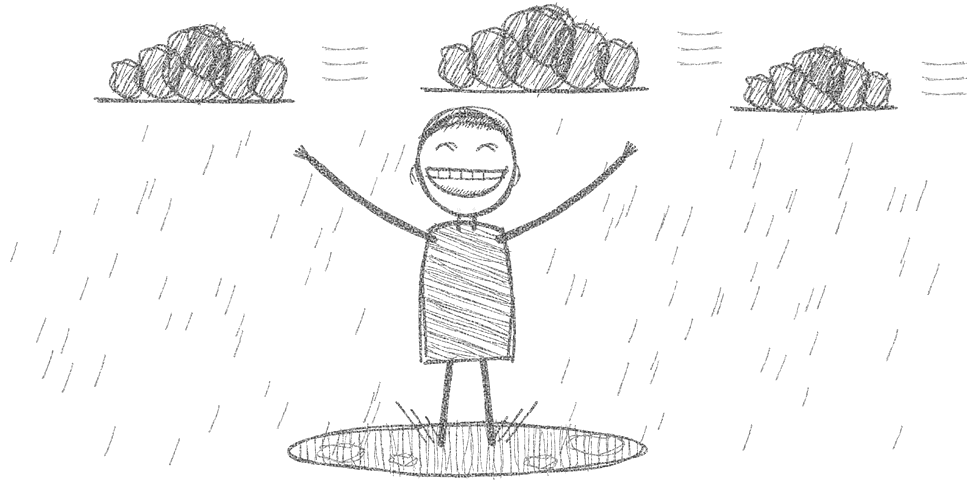
Commentary on the chapter "Attitude towards Oneself"
This chapter opens the series of chapters on feelings and relations for which "On Worldview" became the basis. The first of the relations taken is the attitude towards Oneself, and this is not by chance: on it, as the chapter will show, everything else depends, including the attitude towards one's neighbour and towards God.
"The World is the 'I'" – a conclusion, not a slogan. The chapter begins with a reservation. "The World is the 'I'" is the most amazing conclusion if it is made as a conclusion and has grounds. Without grounds it is a joke, and this formula can be used only with Knowledge. This is the formula towards which "The Goal" was leading, and the same principle as throughout the book: what is said without ground is not understanding but its imitation.
Two commandments. The chapter quotes the words of Christ according to the Gospel of Matthew (22:37–40): the first and greatest commandment is to love the Lord God with all one's heart, with all one's soul and with all one's mind; the second, like it, is to love one's neighbour as oneself; on these two commandments hang all the Law and the Prophets. Here Christ joins two places of the Law: Deuteronomy (6:5) and Leviticus (19:18).
The Author draws attention to the words "as yourself": to love one's neighbour as oneself, one must first learn to love Oneself, and for this – "to know Oneself". The chapter honestly leaves room for interpretation: each relates to the instruction and to the Bible according to his own conviction. The Author's reading is one of the possible ones and is offered as his, without dispute with others.
The ground of love for Oneself. To the question "how can I love Myself if I have not achieved anything significant?" the chapter answers: "Love Yourself only because You are, but love God first, for You – Are a Part of Him". After "On Worldview" this is not consolation but a consequence of the arrangement. The Father grants each living being a part of His "I", and "His 'I' becomes precisely You, i.e. your Personality, your experience". To love Oneself is to love the Spark, and to love the Spark is to love Him whose it is. Hence the order of the commandments: first God, then the neighbour, as oneself. It is not arbitrary; it repeats the order of ground.
Unconditionally and critically. The chapter at once adds: the attitude towards Oneself must be kept "highly critical – worthy of Our Love". Love for Oneself here is unconditional in its ground and critical in relation: it does not have to be earned, but it has to be justified. There is no contradiction, because one does not love for no reason. The ground of Love is Development, as "The Entity Development System" showed, where Love is the constant discovery of the new in another. To love Oneself because You are means to love the Spark, and the Spark is the place of Development. Hence the exactingness: to be is to develop. Mutual Love in this light is mutual Development, and this is what the Author calls Ideal relations.
In Society there is a current formula: one loves not for something but just so. In discussion with the Author it was separated into two senses. "Not for properties" – not for beauty, money or convenience – is true: one loves a person, not his belongings. But "without ground" is not true. Love without ground differs in nothing from attraction to the first one who pleased, and it is exhausted together with the novelty of the external. People who say "I love her as she is" often mean the first, but do not know its ground. And it lies deeper than properties – in Development, in the new that opens in another and is not exhausted. Where it is absent, the union, like every branch without prospect, ceases to live.
This thought has a neighbour in modern psychology. Erich Fromm in "The Art of Loving" showed that love of oneself is not opposed to love of others but is its condition: one who is not capable of loving himself is not capable of loving others either. The similarity is direct. The divergence is in the ground. For Fromm love is an art and an ability that one learns. Here it is rooted in the arrangement: one loves Oneself as a Spark of the Whole, and therefore love of Oneself and of one's neighbour is one love, turned to one Source.
Work on oneself. In work on oneself what is valuable is not so much the result as the very fact of this work, and even the intention. Intention, as "The Real Aspect of the Global 'I'" defined it, is a border phase between desire and action that carries the inevitability of action. Therefore an intention already shown and a forthcoming self-analysis deserve "Sincere Respect": this is a declaration of Love for Oneself. As the measure of such love the chapter names not the level of education but the level of cultivation, that is, of culture: Conscience, Honour, Honesty, even neatness. The distinction is exact: a diploma speaks of a course completed; cultivation, of what the person has become.
Measure. To love Oneself, but moderately, and not so that it humiliates other living beings: all of them are from God. The attitude towards Society, the chapter reminds, is equal to the attitude towards Oneself. This comes straight from "Society and Humanity", where Society is the thinking part of Myself, from the position of each.
Aristotle is fitting here. In Book IX of the "Nicomachean Ethics" he distinguishes two kinds of self-love. The bad kind grabs for itself more money, honours and pleasures, and is rightly censured. The good kind loves in oneself what is best, the rational, and therefore does good to others. The chapter draws the same line: to love Oneself "reasonably" and "moderately" means to love in oneself what makes one kin to the Whole, not what sets one above others.
To give does not mean to give everything away. The chapter fences the intention "to Give" from "Echo" off from an extreme. It does not mean giving everything away to those in need and becoming a beggar. If this happens, it is worth understanding the cause: a gratuitous renunciation of everything humiliates One's Own Dignity, refusing Love to Oneself. The censure for this will come not from God but from Oneself, and it may be expressed not only in poverty but also in ailments. The latter should be held as a model of the system, not as a medical claim: it is the same imbalance which, as "The Entity Development System" showed, the Law of Harmony eliminates, and the ailment here is a warning.
A Christian reader will recall that in the same Gospel, three chapters earlier, Christ says to the rich young man: "go, sell what you possess and give to the poor" (Matt. 19:21). He will recall monasticism, Francis, the renunciation of the Buddha. Tradition reads these words as a call to a special path of perfection, not as a general rule for all, and this is how it should be understood. The chapter speaks of something else, of the general path, and its measure is moderation in everything, in giving too. The one does not cancel the other.
Exchange as a gift. A reasonable intention to Give, the chapter says, is realized not by charity alone but by the satisfaction of needs through the exchange of goods of equal value, including through money. The move is unexpected: exchange is not opposed to the gift but called a form of it. This thought has an old neighbour. Marcel Mauss in "The Gift" showed that in every society a gift gives birth to a counter-gift, and exchange grows out of the gift rather than standing against it. The chapter adds to this what "Echo" showed: what is sent returns. An honest exchange, where each gives the other what is needed, is a mutual gift, and its echo is mutual.
The body and manner. The attitude towards Oneself also includes what is usually considered external: cleanliness, the culture of the body, posture, gestures, manner of behaviour. After "The Contemplated" this is not a trifle. The body is "the representation of a concrete 'I' in the conditions of reality": "look in the mirror – that is how You realize Yourself". To take care of the body is to take care of how the "I" represents Itself in the World.
The indicator. The chapter ends with a practical instruction: observe the attitude of other people towards You; it is the indicator of whether You are in Harmony with the Global aspect of the Entity. A strong objection suggests itself here: the righteous and the prophets were persecuted, Christ Himself was crucified. If the crowd is hostile, does this mean the person is not in harmony? The answer is given by "Echo": what is sent returns, but not at once and not from everyone – on the whole and in time. The indicator is reliable as the general picture of a life, not as a verdict from a single case or a single crowd.
What the chapter is. This is a chapter about the ground of every relation. Shown in it: love for Oneself has a ground in the arrangement – You are a Spark of the Father, and to love Oneself is to love Him in Oneself; the order of the commandments repeats the order of ground; love is unconditional in its ground and exacting in relation – it is not earned but justified; the ground of Love is Development, and mutual Love is mutual Development; the measure of love for Oneself is cultivation, culture, Conscience and Honour; giving requires measure, and exchange is a form of the gift; the attitude of others is an indicator of Harmony, if one looks at the whole life and not at one day. The first of the chapters on relations turns out to be about where love for everything begins: with loving Oneself rightly.
(commentary with the participation of AI: Claude)