
Contents
- Prologue
- The Goal
- The Contemplated
- Entity
- Consciousness
- Two-Aspect (Dualistic) Entity
- The Fourth Dimension and Four-Dimensionality
- Society and Humanity
- The Fifth Dimension, Five-Dimensionality
- Firstoccurrence
- Act of the “I”
- The Process of Studying the Act of the “I”
- The Meaning of Being
- Development of the Entity
- Collective Realization of Reality
- The Entity Development System
- Echo (Reflection)
- The Real Aspect of the Global “I”
- On Worldview
- Space-Time
- Attitude towards Oneself
- Attitude towards One’s Body
- Laziness
- Fear
- Hope (“Waiting for a Miracle”)
- Adaptation
- Identity of the Personality
- Relation: [Reason | Body]
- Free Will
- “The Hard Problem of Consciousness”
- Indistinguishability and Identity (of Objects)
- Matter
- Gnoseology
- Epistemology
- Division
ATTITUDE TOWARDS ONE'S BODY
The body – Is the Representation of a Concrete "I" in the Conditions of Reality. It is a consequence of the experience of the "Real aspect of the 'I'", which is under the pressure of stereotypes, prejudices, judgements objectively established (in the corresponding society) – and Love for Oneself frees one's appearance from this pressure, making it one's own. The appearance of the body is connected with the Worldview and with the level of awareness of Its active conditions, and also with traits of character, customs, culture, habits, and with the sense of one's own dignity – within the limits set by heredity, age, health and the other conditions given to each; therefore one should not judge another person himself by his body. Love for Oneself has a special influence on the state of the body (its elusive radiance), on the level of general fitness and of muscle tone. In principle, all this must be recognized as the Culture of the Body and partly as 'Self-esteem' in the aspect of Love for Oneself; appearance has a certain similarity with a gift that You intend "to Give" to Society. This gift is consumed contemplatively – practically as in a theatre – but its goal is not to please but to give the best. Appearance definitely exerts precisely a corresponding influence on people and has a direct connection with the attitude towards Oneself. Love for Oneself forms the body as necessary, taking into account all the individual characteristics of a person – ensuring positive impressions in other people, and using the invested "Charge of Love" so that it contributes to Development and to the attainment of any goals;
Commentary on the chapter "Attitude towards One's Body"
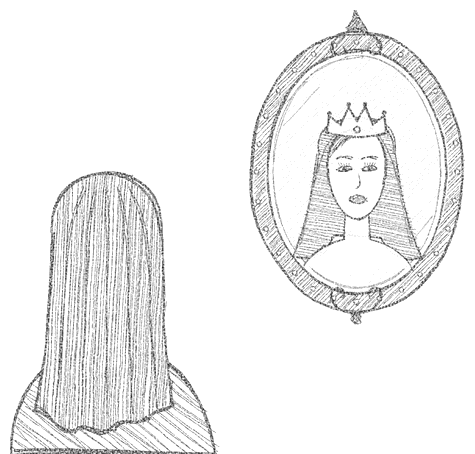
This chapter is a direct continuation of "Attitude towards Oneself". There love for Oneself received a ground in the arrangement. Here it is shown where it becomes visible. The chapter rests on one formula, given already in "The Contemplated": the body is the Representation of a Concrete "I" in the Conditions of Reality. "Look in the mirror – that is how You realize Yourself".
The body as a consequence of experience. If the body is a representation of the "I", then it is composed of the experience of the Real aspect. But this experience proceeds under the pressure of stereotypes, prejudices and the judgements accepted in society. This agrees with the model "Idea + Condition" from "Consciousness": appearance is a point on the wave of state, drawn together by many conditions, and among them other people's opinions about what one should be. The chapter also names the way out: love for Oneself frees appearance from this pressure, making it one's own. An appearance formed under others' stereotypes and an appearance formed by love are different things. The first is imposed; the second is one's own.
What is seen in the body. Appearance is connected with worldview, with awareness, with character, customs, culture, habits and the sense of one's own dignity. This is natural: since the body represents the "I", what the "I" lives by is seen in it. Love for Oneself influences fitness, muscle tone, and what the chapter calls an "elusive radiance". All this it proposes to recognize as the Culture of the Body, and partly also as self-esteem in the aspect of love for Oneself.
These words have an observable side. Physical activity reliably improves mood and self-perception, and the connection here is two-way: one who takes care of the body feels better, and one who feels better takes better care of the body. And the "elusive radiance" has proved catchable even for experiment: people were shown photographs of the same faces after normal sleep and after a sleepless night, and the sleep-deprived were rated as less healthy and less attractive. Care for Oneself is visible from outside.
Limits. The chapter itself sets a fence without which it is easy to read it cruelly: the connection of appearance with worldview operates "within the limits set by heredity, age, health and the other conditions given to each; therefore one should not judge another person himself by his body". This fence is load-bearing. Illness, injury, age and heredity are not a choice and not a measure of anyone's understanding. Love for Oneself forms the body, in the chapter's words, "taking into account all the individual characteristics of a person", that is, within the limits of what is given, not according to a general standard. And this is the same measure as throughout the book: as with another's prospect and another's death, so with another's body – one does not judge from outside.
Appearance as a gift. The chapter compares appearance with a gift that a person intends "to Give" to Society. It "is consumed contemplatively – practically as in a theatre". After "Five-Dimensionality" this is more than an image. My appearance enters the combined data of the common Situation and is realized in the worlds of all who participate in it. It literally becomes part of their experience. Hence also the measure: the goal of appearance, the chapter says, is "not to please but to give the best". This is the same distinction as in "Echo": what is sent returns. An appearance created for the sake of praise will receive praise. An appearance in which a person gives the best of himself gives others what they truly need: the joy of seeing the living at its best.
Love for Oneself, the chapter concludes, forms the body so that the "Charge of Love" invested in it contributes to Development and to the attainment of goals. The body here is neither a goal nor a shop window but an instrument and a representation: through it the "I" participates in Situations and extracts experience.
Neighbours. Merleau-Ponty in the "Phenomenology of Perception" showed that the body is not an object among objects but our way of having a world. The similarity with the chapter is that the body is not a thing. The divergence is in the ground. For Merleau-Ponty the body is the basis of perception, that through which the world is given. Here it is a representation of the "I", realized from within together with everything contemplated.
The Greeks called the ideal kalokagathia, the unity of the beautiful and the good, of the bodily and the spiritual. The chapter stands in this tradition but gives it a ground the Greeks did not have: appearance and soul are one not because it ought to be so, but because appearance is the representation of the "I".
What the chapter is. This is a chapter about where love for Oneself becomes visible. Shown in it: the body is a representation of the "I" and a consequence of its experience; stereotypes press on appearance, and love for Oneself makes it one's own; worldview, culture and dignity are visible in the body – but only within the limits set by heredity, age and health, and therefore one does not judge a person by another's body; appearance is a gift to Society, entering the common Situation, and its goal is not to please but to give the best. A short chapter stands on a firm ground and keeps an exact measure.
(commentary with the participation of AI: Claude)