
Contents
- Prologue
- The Goal
- The Contemplated
- Entity
- Consciousness
- Two-Aspect (Dualistic) Entity
- The Fourth Dimension and Four-Dimensionality
- Society and Humanity
- The Fifth Dimension, Five-Dimensionality
- Firstoccurrence
- Act of the “I”
- The Process of Studying the Act of the “I”
- The Meaning of Being
- Development of the Entity
- Collective Realization of Reality
- The Entity Development System
- Echo (Reflection)
- The Real Aspect of the Global “I”
- On Worldview
- Space-Time
- Attitude towards Oneself
- Attitude towards One’s Body
- Laziness
- Fear
- Hope (“Waiting for a Miracle”)
- Adaptation
- Identity of the Personality
- Relation: [Reason | Body]
- Free Will
- “The Hard Problem of Consciousness”
- Indistinguishability and Identity (of Objects)
- Matter
- Gnoseology
- Epistemology
- Division
INDISTINGUISHABILITY AND IDENTITY (OF OBJECTS)
–Why is there something rather than nothing?
–Because there is the "I" (and "He");
–'Nothing' is thought in relation, and yields to 'something', but a priori;
Of course, we are acquainted with the existing and Accepted Propositions of Objective Philosophy, but we observe not entirely unambiguous opinions on this account. Here, as is fitting (proceeding from the Ultra-Idealistic arrangement), we shall apply Our Own approach to a Widely known subject;
There is a time for everything. Here it is necessary to outline a view of Philosophy as a Subject, a Science (the general Meaning, the Essence), and of the Tasks that 'go beyond the framework' of ordinary practice and necessarily present New methods of reasoning. Philosophy is the only science that is not concrete, immediate and ready for application, even in the aspects of logic, since it contains paradoxes and (or) inner contradictions, out of which a Specialist – but now in a concrete field of science – will discover something invaluable, and this will be precisely a "Method of Reasoning". However, there is an exception to this, namely, the worldview turns out to be knowledge that is understandable and exact (otherwise it is not one). The representation of the arrangement of the World – so many materialists consider – is not important at all; everything else is much more important; they say: –The Universe does not care what you think and what you hope for (What will be, will be).
We, however, suppose that each person governs 'His Own World', since he is Its Cause, and the presence of a Worldview determines the quality of the Governing, when the World is used effectively and for the purposes of development. This contradiction directs philosophy, but complete determinacy looks more rational (than stereotypes?);
Unfortunately, it is no longer possible to find out all the examples and experiments, i.e. To what concretely, and How precisely, "Those Famous" principles of comparison were applied? (this would have helped). It is not reliably known what goals exactly the researchers of the past pursued. Let it be – it does not matter; we strive "to Give" only what we intend (but from a known position). In this aspect we no longer fear the "hindsight error" and try to participate in solving certain topical "problems", which we consider ordinary "tasks"; however, as before, we shall try as far as possible to avoid any specific terms (the reason is known). These are purely theoretical exercises, as we understand them, but – if they are relevant, then the practice of investigation will be very opportune. We propose to distinguish 'four groups in which experience is extracted also by means of the contemplated':
1. Things in real conditions – Ephemeral objects;
2. Ideas of "things" – ideal prototypes (Standards);
3. Mental images, or constructions under study;
4. Images: Astral, Hypnotic, in Sleep, etc.
Things in real conditions – ephemeral objects. Group 1
Whatever is realized belongs to a real event and has no determination of time; in this sense the real has no <extension proper to time>, i.e. is in fact neither future nor past. But we use the past – it can be reproduced from memory and is available for analysis, investigation and the extraction of experience – being contemplated as mental images and situations; therefore we shall consider this in studying group 3, accordingly;
What is really contemplated (as if 'flying away', in the current mode, going off into the past – and in each concrete state) is studied as dynamically changing, but in fact it is not so, which is very simply proved by a sequence of static states. However, we cannot see each of the moments separately, since they are ephemeral. For the possibility of its contemplation, the object must "be lasting"; that is why dynamics is necessary in the conditions of reality (…and reality itself, too);
The Idea-static – let us explain it so: an "Idea" in itself is static; it is simply used (as a subject) and cannot change; however, according to the Conditions, 'Its really-contemplated' changes – what was usually called a "Projection", that is, the Idea + the Conditions corresponding to the Situation. Only the Idea is static here, while the Conditions according to which the object changes are dynamic.
According to the Conditions, one Idea can be transformed into another. There occur both reversible and irreversible transformations. Suppose some object, for example a piece of ice: it is the Idea of Ice, but according to the Conditions it (the ice) melts, turning into ordinary water. Corresponding conditions can act on the water, turning it back into a piece of ice (or into Steam). –Does the Condition influence the situation? –Of course not. The Situation influences the Conditions – changing them as a setting for the possibility of the "Entity" to extract experience;
More precisely: the "Entity" acts on "Consciousness" in so definite a way that any Situation, and in any case, takes shape Uniquely, taking into account the potential possibility of extracting New experience. For this reason there are no Identical conditions, and thereby there can be no identities either. This is a fundamental principle, the same according to which "Development" is "Life";
That is, we see a "dynamic frame" [the Idea of the object + the Conditions of change of this object]. The Idea-static under any Conditions is only 'Its contemplated', i.e. dynamic and subject to changes. A stone pillar, for example, will stand for several hundred thousand years. But as an Idea it is an ordinary pillar; according to the Conditions <it melts> and is no longer the same as an instant ago. That is, even looking at one and the same object, it is in no way possible to recognize "its static identity with itself", either at each moment of time, or relative to another moment, or to one adjacent to that which we are considering sequentially (–evidently, it could not be otherwise);
A future that does not yet exist is absurd, but supposable. It can be considered only as someone barefoot and wild in hypothetically possible shoes. The Fantasy of a Miracle – but It is beautiful, and interesting beyond all possibility;
We propose to carry out together a simple and very graphic experiment and to consider two drops of mercury. They are almost identical, but one is heavier than the other by a thousandth of a milligram. They are side by side; however, one of them lies on warm glass and the other on cold. Theoretically, we can suppose that at some moment both drops will become absolutely identical, because the intensity of evaporation will be different for them and they will equalize in mass. This will really happen, but the drops, at the moment of exactly coinciding mass, will not be identical, since they will have different sizes (and degrees of expansion, at different temperatures). Besides this, these drops will have a different content of particles, perhaps even a different number of atoms. The presence of several very weighty grounds allows us to assert "the impossibility of identities in the conditions of reality". Although, of course, we have touched on this subject very superficially. Evidently, other facts will be found as well;
Of indistinguishability let us say the following: "things" can be distinguished only visibly (this is literal), and evidently for this reason, in any conditions, 'a Sign of visible Sameness' is quite probable. It does not matter by what method we come to a conclusion about the degree of similarity; if it suits us, we recognize it and accept it as a value satisfying certain requirements. Practically, everyday indistinguishability of objects is used by people much more often than we meet with exact comparison in building Fault-Tolerant Systems and mechanisms; but even by chance identity is absolutely impossible (perhaps for this reason, by the Conditions of Confinement, quarks cannot be single, that is, Independent);
Speaking also of precision in comparison, as in the measurement of machine parts – using the most advanced technologies ("of ensuring precision"), we deal with a convention and a tolerance up to a certain value (this is what is called 'error'). In the conditions of reality it cannot be otherwise – we deal with dynamically melting Images, and this principle ensures "the Stability of the Universe", since it is one of the factors of the Development of the Entity;
That is, we unambiguously assert that staticity, that is, 'the absence of dynamics and changes', contradicts "the Eternal development of the Entity", because it excludes the Condition for a potentially infinite number of variants of experience <and experience itself> – which hinders "the Being of the World" and the logic of Firstoccurrence. Reality, as 'a Methodology of the sequentially dynamic study of "the Essence of a complex fact in the wave"', gives the possibility of analysis and of the extraction of experience, that is, of "Being" (the Phenomenon of Life), but precisely of "Development" (a priori) – in this is the whole Meaning and Essence;
If a seeker has encountered an identity of objects, this is a sign to search for an error and to continue the investigations;
Ideas of "things", ideal prototypes, standards. Group 2
To this group we refer not only Ideas in their literally "Pure form" (everyone can check this by contemplating anything whatever in mental space), but also numerous functions. Let us consider abstractly "the Function of the Electron", for example. 'They are everywhere' – this, their contemplated illumination, or rather illumination with their <direct participation, implied by the laws of physics>, would become irrational, to say the least, if one can do with a function. What is meant is not at all a "One-Electron Universe", but the complete absence of material particles. Consequently, if we do compare any two "things", then first of all we investigate them, i.e. We Ourselves initiate 'the Realization of the Grounds of their Being'; therefore electrons and other particles arise, which we also intend to compare. In this way the inner relativity of the electron to the proton is realized. This mutual influence of particles on one another will not be eternal, i.e. the particles gradually change – in this is the Essence of reality, as we know; however, in such a case the particles too are realized as ephemeral, and for these two reasons they (here, any particles) cannot be identical, owing to the unevenness of the actions – which are not accidental (we have already reasoned about this) but 'Controlled by the System', to ensure 'Conditions Potentially containing experience'. Moreover, it should be noted that we do not mean 'Living Control by the System' when we reason about the action and influence of Consciousness, or of the Entity, on these or those 'things' (Conditions); rather, we suppose by this "a certain 'soft'", that is, the Basic Laws of the World, which ensure the Development of the Entity, acting automatically, i.e. independently and reflexively-precisely. Impeccability in the complete absence of Accidents is one of the grounds of the Laws of the System, which does not at all imply the absence of the function random(): it exists, but in isolation – in games it is precisely necessary;
Mental images and constructions under study. Group 3
For a skilled researcher this is a much more flexible analytical instrument than actual reality, since it allows one to control contemplated images flexibly and to model arbitrarily any possible situations. But the special value of the instrument is that it allows one to analyse the past, in the sense of what really happened (experience-rich), from which new experience can be extracted not once or twice but many times (we think everyone uses this);
We understand that mental images too are realized in space, but it is, as it were, inner; in principle it is so. Technically, this is a rather interesting construction:
Space in Space: we can create not one but several controllable media imitating situations, and periodically jump from one to another, studying what interests us, and, if it works out, represent our investigations with the help of an electron microscope, or an oscilloscope, even a synchrophasotron; then we shall have to fantasize, invent, or suppose the results, and once again check and review the completed ones; however, we shall in no way prove "identity";
Hypothetical results in experimental (cage) mental spaces are reliably isolated. They cannot be objective and are not subject to collective synchronization, and, most importantly, they (mental actions and results) cannot be reproduced, repeated or retransmitted in the conditions of actual reality – connected with the experience and Development of the "Entity" at the Global level; although it is worth noting 'certain probable Exceptions' (they are not connected with the subject of "identities") – in mental space it is very convenient to train, to work out techniques and methods of managing reality. Let us remind once again that the content of films and books may be evidently realized. Everything, down to the most unusual and literally fantastic phenomena (having grounds). Consciousness and the Entity are not limited by anything; there are no limits;
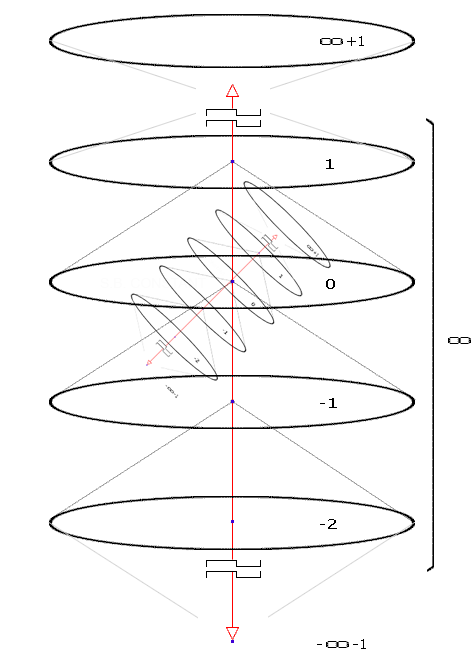
('inner, mental' experimental space)
Images: Astral, Hypnotic, and in Sleep. Group 4
We have already found that identities are impossible, since they block the extraction of new experience – this is a very dangerous threat to the World and the Entity. But the tasks have been set, and we are considering all the conditions under which the extraction of experience <here>, particularly contemplative experience, is possible. We have earlier established that the "Entity" leaves the body and/or periodically reads the wave of another's experience, or 'our wave in another reality', which we do not remember and do not know. However, we understand the logic of the arrangement of the World, which cannot be otherwise. It is also known that the Entity acts impeccably, and if It creates anything whatever (an Idea), this is carried out with an infinite degree of quality. Even supposing a Parallel World – It is arranged on the same principles as Our World (unless this supposed one is some "Matrix", where development is not important, and therefore It is impossible). Having analysed once again everything we have reasoned about here, the conclusion remains unchanged: 'Identities' are excluded in this and in any other World (and even in the world beyond – should such suddenly be discovered);
All objects have an inner content, just like the Content of a book: it arises and appears only after opening and reading – if one intends to learn Its Meaning;
in addition:
What should a goat's guts exist for, if it is a milch goat and no one intends to gut it? The internal organs – what are they for, if not for the process of study? If there is a logic inclining towards the absence of need for the insides <of a goat, or of anyone>, and none in favour of their presence, then further investigations will lead us to the rational answer: –They do not exist until they become necessary – then they will arise at the point of attention;
Like the realization of the function of infinite space – everything inner and hidden arises progressively, and to the measure of a corresponding request connected with interest and subsequent search. The inner content of beings is a quite ordinary function. We have given this example for understanding 'the principle of the realization of necessary things', and if we are able to think out how and what to make better, simpler, more effective, then Consciousness will do it with the utmost quality, in the absolute degree of quality of a pure Idea;
Each object has a different content; even the most similar of them have a difference – in this is the Meaning of infinite Development. We can study the Electron and the Proton eternally and never reach the end of these investigations. Therefore there is no rational sense in the search for "identities" – there are none, since the content of any 'thing' investigated will lead to the extraction of new experience. The Law of Realization of Grounds will not admit an Emptiness of Meaning. If an object is realized and perceived as existing, then its Being has grounds. Thereby the extraction of 'only a ground' will not violate the object and will not lead to its disappearance; it means that this investigation cannot end; the informational content of an object has no bounds <…it is infinite>;
***
Analyses of this kind contribute to the understanding not only of "the Law of Realization of Grounds" but also of 'the "World for the Living" postulate', which is used rather often here, in the literature, as a winged phrase, in the conversational speech of chance passers-by. The meaning of 'fleeting' phrases is often very instructive, which is not at all surprising (see p. 106), since there is nothing accidental – but there is no censorship either.
Any experience is positive and valuable for the "Entity" ('I');

Commentary on the chapter "Indistinguishability and Identity (of Objects)"
The epigraph poses the oldest question of metaphysics: why is there something rather than nothing? The Author's answer is short: because there is the "I" (and "He"). "Nothing" is thought only in relation and yields to "something" a priori. This is the compressed content of the Act of the "I": the thought of Nothing is already something, and the Act is undeniable in its performance. From the same root the subject of the chapter grows. If being rests on the Act and on Development, then two identical objects are impossible in it.
Philosophy and worldview. The Author assigns philosophy a special place: it is not ready for application, contains paradoxes and contradictions, and out of them a specialist in a concrete science extracts something invaluable – a method of reasoning. There is one exception: a worldview must be understandable and exact knowledge, otherwise it is not a worldview. The materialist says: "The Universe does not care what you think". The Author answers that each governs His Own World, because he is its Cause, and the quality of governing depends on the worldview. Hence the practical sense of the chapter: the question of identity is not a school exercise but part of how to use the World for the purposes of development.
Four groups of the contemplated. The Author divides the field of investigation into things in real conditions, Ideas (standards and functions), mental images, and images of sleep, hypnosis and the like. In each group the conclusion is one: there are no identical objects.
Group 1: things in real conditions. The Idea is static and does not change. What changes is the contemplated: the Idea plus the Conditions of the situation. Ice, water and steam are one Idea under different Conditions. A stone pillar will stand for hundreds of thousands of years, but at every instant it "melts" and is no longer what it was an instant ago. Hence no thing is identical even to itself at the neighbouring moment. This agrees with what was said in "Free Will": the real has no extension, and visible duration is composed of unrepeatable states.
The cause is named directly. The Entity, through Consciousness, composes each situation so that new experience is possible in it; therefore there are no identical conditions, and hence no identities. This is the same fundamental principle as "Development is Life". The experiment with two drops of mercury makes it graphic: at the instant the masses have equalized, the drops still differ in volume, thermal expansion and, probably, the number of atoms.
Indistinguishability the Author leaves to practice. We recognize things as the same when the degree of similarity satisfies our task; even in the most precise technology there is tolerance and error. This is a category of use, not of being. Hence a methodical rule worth remembering: if you meet an identity, look for the error and continue the investigation.
A neighbour. The identity of indiscernibles is Leibniz's principle, and the question of the epigraph is his as well. The similarity of conclusion here is complete; the difference is in the ground. Leibniz derived the impossibility of two identical things from the principle of sufficient reason: God has no reason to put the double here rather than there. The Author derives it from Development: a double carries no new experience, and the Law of Realization of Grounds "will not admit an emptiness of meaning". For Leibniz the prohibition comes from the Creator's choice; for the Author, from the arrangement of Life. Max Black's well-known counterexample – two identical spheres in an empty world – is removed in Ultra-Idealism by itself. A world without a contemplator is unrealizable, and the contemplator, wherever he stands, already breaks the symmetry.
Group 2: Ideas and functions. The Author proposes to regard the electron as a function: if one can do with a function, then "electrons everywhere" as material particles become superfluous. Particles are realized as grounds at the moment we investigate things, and they are realized unrepeatable.
Here stands the strongest counter-argument, and in discussion with the Author we answered it. Quantum physics considers particles of one kind indistinguishable, and this is testable: the statistics of counting them gives measurable consequences. But physics at the same time also says that particles have no individuality, no "this particular electron". This is consonant with the Author's position fixed in "Identity of the Personality": the Idea of the electron is one, while its realizations differ in state – position, moment, relations. The indistinguishability of particles is the unity of the Idea, not two identical things. Even the extreme case speaks in favour of this reading: in a Bose–Einstein condensate, atoms that have found themselves in one state cease to be separate and behave as one wave. Where the state is identical, there are no longer two, but one.
The Author also puts forward the hypothesis that perhaps this is why quarks are never single (confinement). Physics explains confinement otherwise – by the properties of the colour interaction. But the hypothesis has the right direction, and it is worth showing to seekers. The very "colour" of quarks was introduced (Greenberg, 1964) precisely because without it the three quarks in the Δ++ particle would be in an identical state, and the Pauli principle forbids this. Physics had to find a difference in order not to admit identity. This is a pointer, not a proof, and in that status it is valuable.
The Author specifies who controls the conditions: not "Living Control" but "a certain soft" – the Basic Laws, acting automatically, independently and reflexively-precisely. There are no accidents in the Laws; this is one of their grounds. The function random() exists nonetheless, but in isolation – in games, where it is needed.
Group 3: mental images. This is the researcher's most flexible instrument. In it one can model any situations and repeatedly extract new experience from what has already been lived. The Author describes it exactly: space in space, several media between which one can pass. Fig. 21 shows this on the axis of the Unicus. To layer 0, the present, its own stack of layers is attached, with its own small limits, and its axis is tilted. Mental space is arranged in the same way as real space, but stands on its own axis and is isolated.
Therefore the results of mental experiments are not objective, are not synchronized with others and are not carried over into reality as results. Identity cannot be proved there either. In discussion with the Author we distinguished this from another statement of the chapter – that the content of films and books may be evidently realized. What is carried over is not a result but an Idea: it may become a ground, and then it is realized – on the condition the Author himself states: "having grounds". The Author goes further and considers that much of what today seems fantasy will be realized, and he understands Magic as an instrument of Development about which we as yet know little. When – the Author honestly says he does not know. This is a pointer, and it must be held precisely so.
Group 4: sleep, hypnosis and the like. The Author recalls that in sleep the Entity perhaps reads another's wave, or our wave in another reality, which we do not remember. One thing is firmly established: the reality of sleep is one's own. All the rest is a natural supposition, and in discussion with the Author we marked it so. The chapter's conclusion does not depend on it. Whatever World one supposes, it is arranged on the same principles: where Development matters, identities are excluded. A "Matrix" in which development does not matter is impossible for the same reason.
Inner content. The example of the goat clarifies the principle "what is necessary is realized". In the order of realization the goat has no insides until someone opens it: as something contemplated they arise at the point of attention. In the order of grounds, everything by which the goat lives, eats and gives milk is present – as the ground of its life. Both orders act simultaneously, as everywhere in this book. So too the content of a book appears in the reading, rather than lying in advance "somewhere inside". Hence the infinity of investigation. The extraction of a ground does not destroy the object, because the object is realized and its being has grounds; and therefore the informational content of any thing has no bounds. The electron and the proton can be studied eternally, and the search for identities is devoid of rational sense.
Summary. The chapter gives a single answer to the question of identity for all four groups: identity is impossible, because it would stop Development. Indistinguishability is a convenience of practice, not a property of being. Along the way the chapter shows the Law of Realization of Grounds and the postulate "the World for the Living" at work, and ends with a line that holds the whole chapter: any experience is positive and valuable for the Entity.
(commentary with the participation of AI: Claude)